People often ask why a stir-fry at home never tastes like one from a restaurant kitchen. It is rarely the recipe. It is almost always one of these four things.
1. Heat, and the breath of the wok
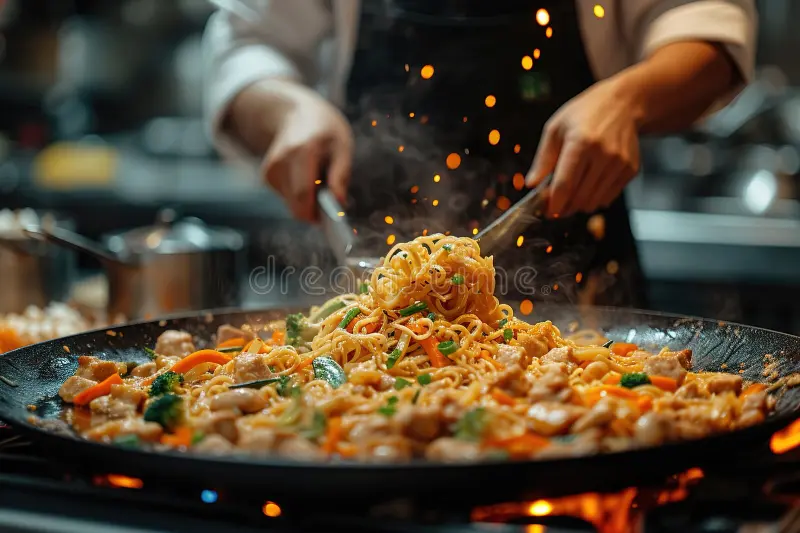
Cantonese cooks call it wok hei — literally "the breath of the wok". It is the faintly smoky, seared character a stir-fry picks up when the pan is hot enough for food to caramelise on contact instead of stewing in its own moisture.
Domestic burners rarely reach it. Ours run hot enough that the wok is smoking before anything goes in. At home, the workaround is to cook in small batches: a crowded pan drops in temperature and everything steams.
2. Velveting
This is the reason restaurant chicken and pork are so tender. The meat is marinated briefly in egg white, cornflour and a little rice wine, then passed through warm oil or water before the actual stir-fry. The coating sets and protects the meat from the fierce heat that follows.
It takes fifteen minutes and it is the single biggest improvement most home cooks can make.
3. Everything ready before anything starts
A stir-fry is ninety seconds of cooking and twenty minutes of preparation. Once the wok is hot there is no time to chop garlic. Every ingredient, every sauce, measured and within arm's reach, in the order it goes in.
If you find yourself reaching for something mid-cook, the dish is already overcooked.
4. Knowing when to stop
The most common fault we see is overcooking. Greens should still have a snap. Sliced meat needs seconds, not minutes. Fish is done when it just flakes. Chinese cooking is fast, and the last ten seconds are usually the difference between a good dish and a dull one.
On seasonings
Substitutions are where authenticity quietly disappears. Light soy for salt and dark soy for colour are different products. Chinkiang black vinegar is not balsamic. Doubanjiang — fermented broad-bean paste — has no real substitute, and it is what gives Mapo Tofu and Twice Cooked Pork their backbone. Sichuan peppercorn provides numbness, not heat, and leaving it out changes the dish entirely.
Come and taste the difference
Our Twice Cooked Pork at Rs. 860 shows all four principles at once. The full menu is online.